
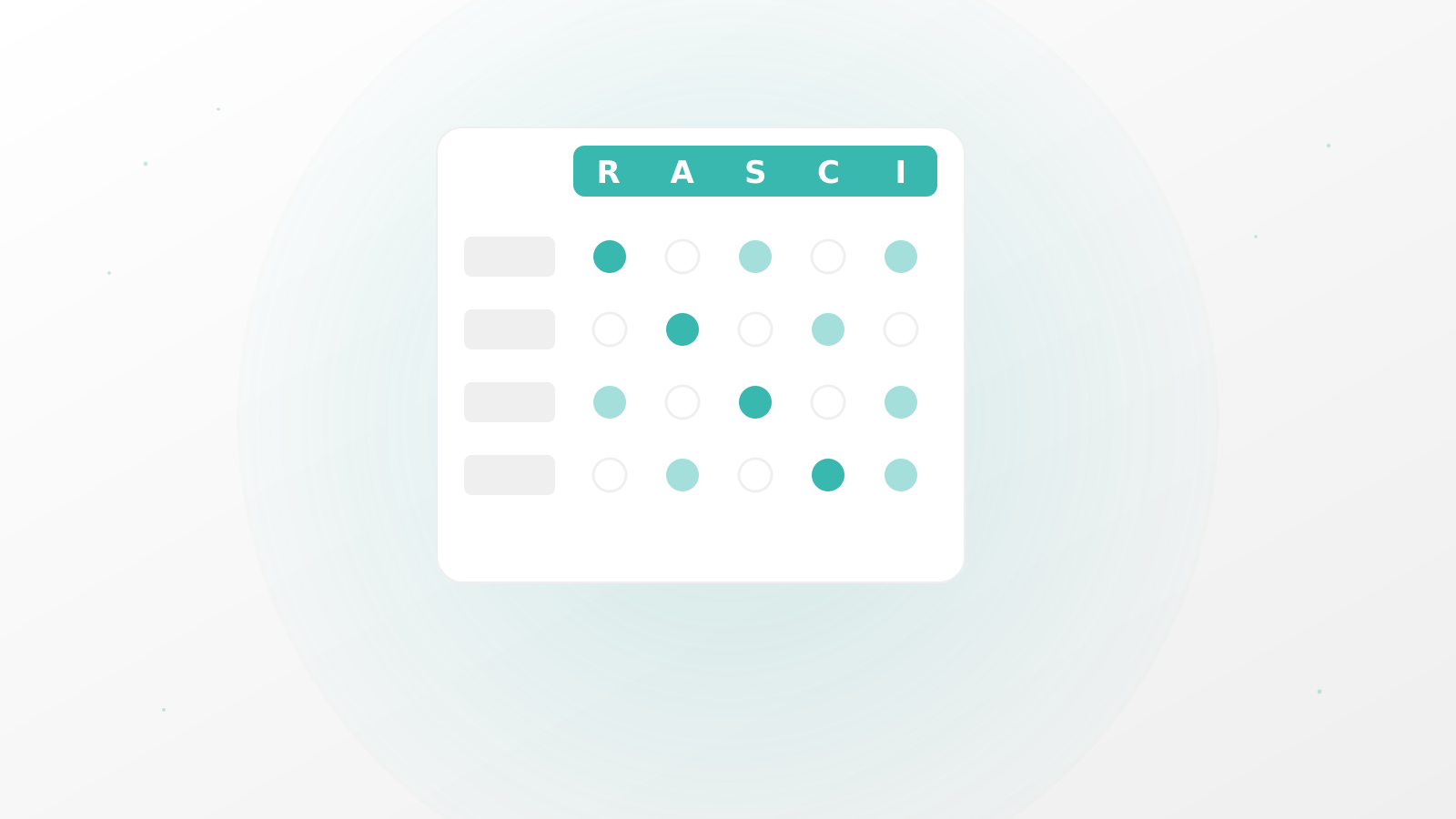
In a crisis, you don’t have time to wonder who does what
When an incident hits, the clock is brutal. The first decisions shape the next four days. And yet the most expensive failure is rarely technical: it’s the fog over responsibilities. Who qualifies the incident? Who is allowed to decide? Who arbitrates when two teams disagree? Who keeps the record?
The fog on roles costs more than the crisis itself. Every minute spent asking “wait, whose call is this?” is a minute the attacker, the regulator and your stakeholders are not giving you back.
RACI, RASCI: the framework that ends the guessing game
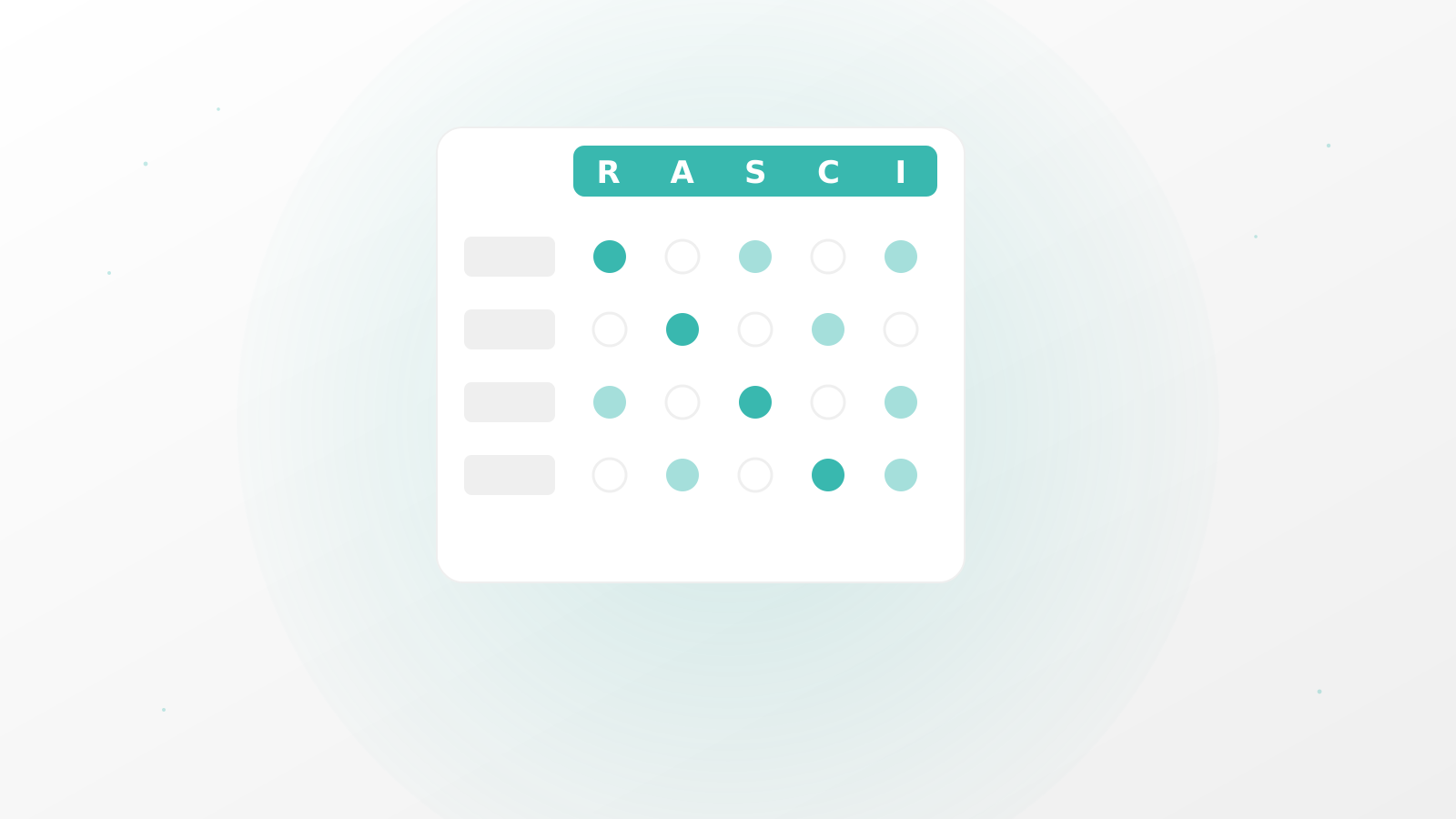
A RACI matrix assigns, for every task, who is Responsible, Accountable, Consulted and Informed. RASCI adds an Support role, the people who actively help the responsible person get the job done. It sounds bureaucratic on a calm Tuesday. In a crisis, it is the difference between a coordinated cell and ten people talking over each other.
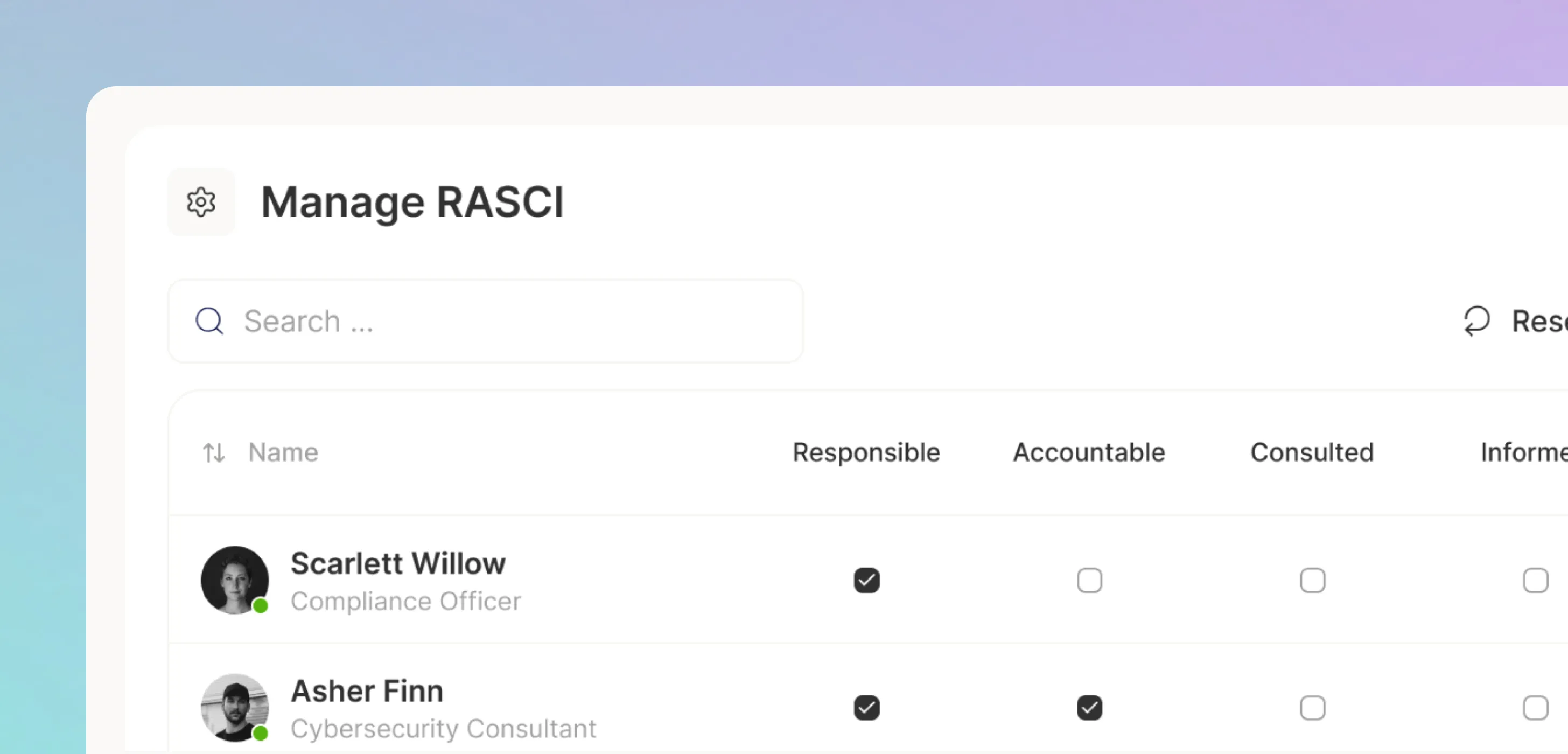
The point of the matrix is not paperwork. It’s three things:
- A single accountable decision-maker per action, so arbitration is fast and unambiguous.
- Clear support and consulted roles, so the right people are pulled in without flooding the room.
- A shared mental model, so nobody freezes waiting for permission they already have.
PanicSafe brings order: guided crisis plans, not improvisation
PanicSafe bakes this discipline into the platform. Instead of a static matrix buried in a binder, your roles and responsibilities are wired into the live response.
- Guided crisis plans sequence the response: qualification, containment, resolution. Each step carries its expected actions and the role responsible for them.
- Roles, decisions and arbitration are piloted and traced, so accountability is never improvised under pressure.
- The cell organisation is defined up front, so when the alert lands, the cockpit already knows who sits where.
Three things that change on day one
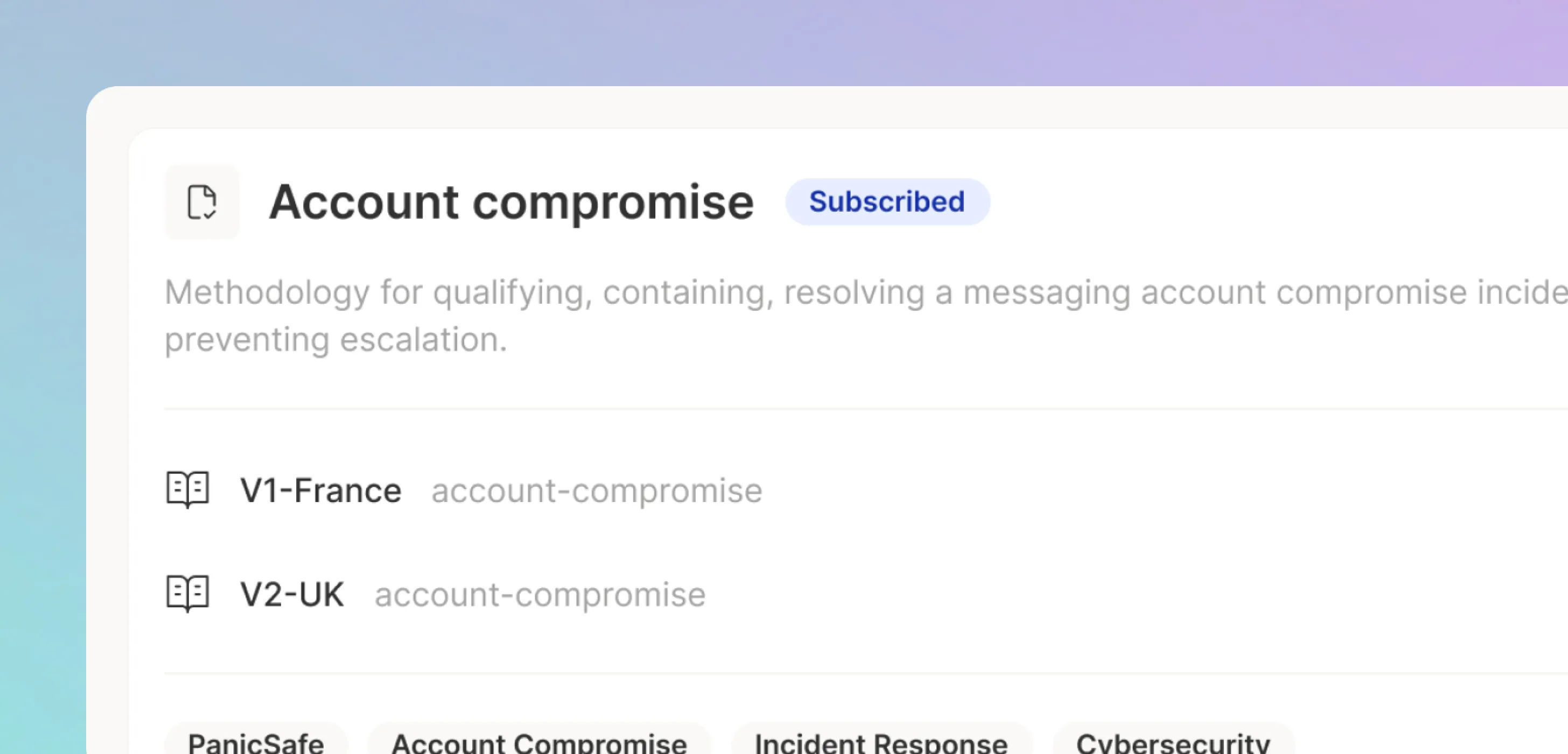
1. Crisis plans that sequence the response
Qualification, containment, resolution: the plan walks the cell through each phase with the expected actions already mapped to the right RASCI role. No blank page, no improvisation.
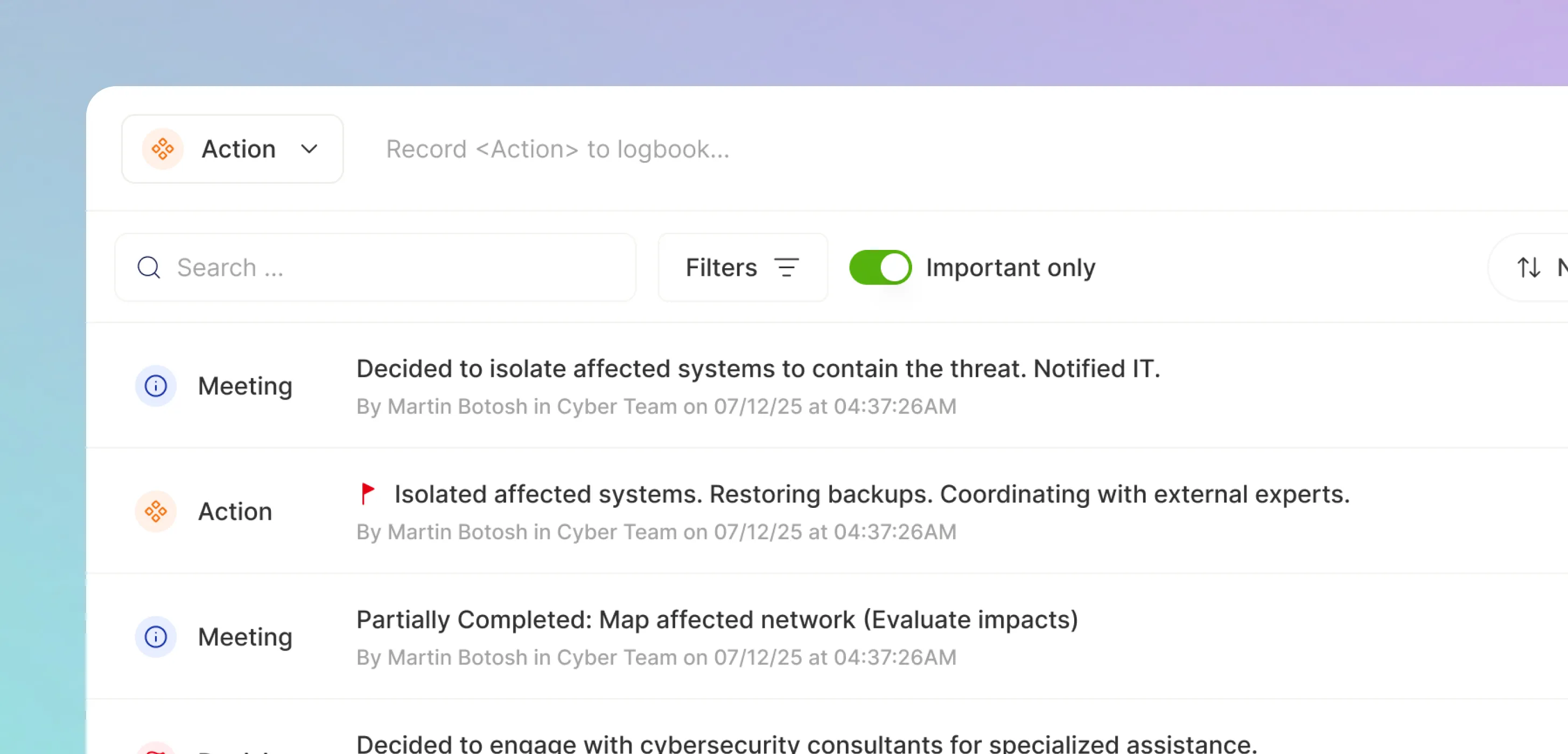
2. Traceability with a living logbook
A logbook (main courante) records every decision and action as it happens, with who, what and when. When the dust settles, your post-mortem and your regulator-facing report are built from facts, not from reconstructed memory.
3. Coordination from a single cockpit
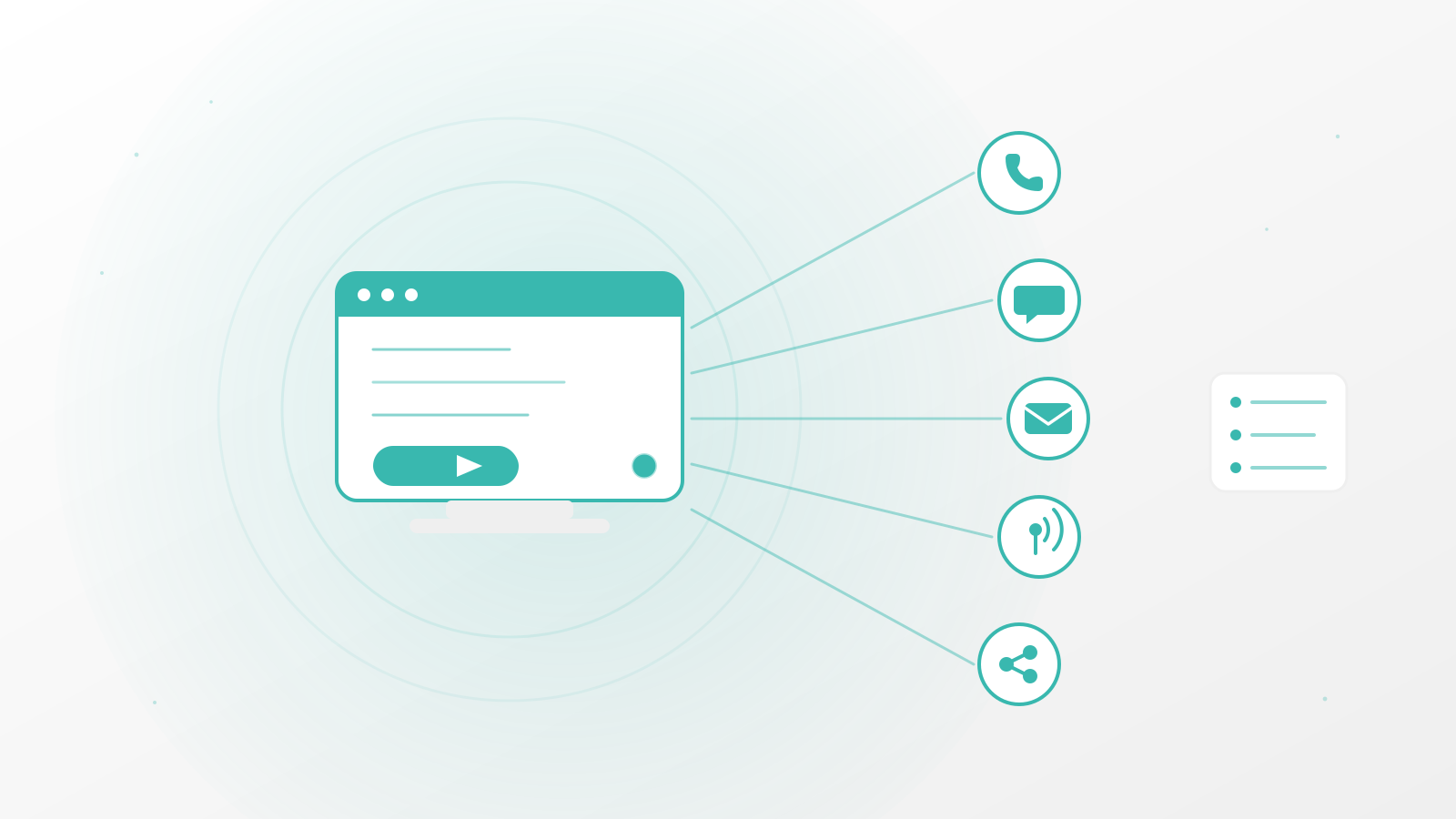
One cockpit instead of ten scattered channels. No lost decisions on WhatsApp, no contradictory threads on Teams and email. Everyone works from the same operational picture, in real time.
Avoid the crash: prepare your organisation
A crisis is a stress test of your governance. The teams that come out fastest are not the ones that improvise best, they’re the ones whose RACI was decided long before the alarm.
Want to test your current organisation against a real scenario? Let’s run a crash test together and see where the fog hides.
👉 Book a PanicSafe demo and we’ll walk you through a scenario tailored to your context.
Continue reading
This is not a drill: what a useful cyber crisis exercise really looks like
A useful cyber crisis exercise is not a PowerPoint, it is an operational rehearsal. With PanicSafe you run a realistic simulation in a safe, isolated environment and train the right reflexes: qualify, decide, coordinate, trace.
MSSPs and integrators: detection is your job. Crisis is your blind spot.
You detect, alert, escalate. But what happens on the customer side once the alarm goes off? PanicSafe gives MSSPs and integrators a turnkey crisis management brick that complements their SOC offering.
ANSSI and ENISA crisis management: a methodology your team will actually use
How to translate the ANSSI and ENISA cyber crisis frameworks into a practical, RACI-driven methodology that holds up under real-world pressure - not just on paper.